

Commercial HVAC systems in Cocoa, FL, face heavy use due to the hot, humid climate that dominates much of the year. Over time, these systems lose efficiency, experience more frequent breakdowns, and drive up operating costs. Upgrading an aging HVAC system may seem like a significant investment, but it offers a range of valuable benefits that can quickly add up for local businesses.
… Continue Reading
Understanding Your Commercial HVAC Service Agreement
A reliable commercial HVAC system is the backbone of comfort and productivity for your business. In Florida’s often humid, unpredictable climate, maintaining indoor air quality and consistent temperatures is essential to keep employees, equipment, and guests comfortable. One of the most effective ways to achieve this is through a commercial HVAC service agreement, a customized maintenance contract designed to reduce downtime, control costs, and extend the lifespan of your heating and cooling equipment.

What a Commercial HVAC Service Agreement Includes
A commercial HVAC service agreement defines the relationship between your business and your HVAC provider. For local businesses in Cocoa, FL, these agreements typically spell out:
- Regularly scheduled preventive hvac maintenance for systems such as packaged rooftops, split systems, and heat pumps.
- Emergency response protocols and repair timelines.
- Clear payment, service, and renewal terms.
- Coverage details for labor, replacement parts, and sometimes even new system installation.
- Specifics on compliance with local codes and business safety standards.
For example, a property manager of a retail plaza in Cocoa may have several heat pumps and rooftop units under contract. Their agreement ensures routine inspections before each season, focusing on filter changes, belt checks, refrigerant levels, and vital component testing to help prevent costly breakdowns. If a sudden issue, like a heat pump failure, arises, the agreement guarantees priority response for heat pump repair and system diagnostics to minimize business interruption.
Key Benefits of a Commercial HVAC Service Agreement
Commercial HVAC systems face heavy demands from high occupancy, frequent door openings, and high humidity. Those pressures make preventive maintenance an operational priority. Key benefits include:
- Predictable operational costs with set pricing for regular service and discounted rates on critical hvac repair.
- Minimized unexpected downtime, critical during peak business hours and seasonal surges.
- Improved system reliability, lowering the risk of sudden failures under summer heat or winter cold snaps.
- Documented maintenance history that supports warranty claims and ensures adherence to local building compliance codes.
- Prolonged equipment lifespan due to proactive part replacements, coil cleanings, and refrigerant management.
For instance, a manufacturing facility in the region relies on chillers and multiple air handlers that cannot afford extended downtime. Their service agreement outlines a twice-yearly tune-up and 24/7 emergency support to keep sensitive equipment within regulated temperature ranges.
What to Watch for When Reviewing a Service Contract
All contracts are not created equal. When evaluating an HVAC maintenance agreement, consider the following:
- Make sure the scope of services covers both preventive maintenance and urgent repairs.
- Seek transparency in all cost and contract terms, avoiding vague language that could hide additional fees.
- Confirm the frequency of inspections matches your facility’s system types and usage, Florida’s year-round demand favors semi-annual or even quarterly schedules.
- Ask about the provider’s local experience; for businesses in Cocoa, it is critical to have a team familiar with coastal weather, salt air, and the particular stress those conditions add to HVAC systems.
- Examine insurance and liability clauses to ensure your property is protected during any onsite work.
Tailoring the Agreement to Your Needs
A robust commercial HVAC agreement is not a one-size-fits-all document. Your facility’s unique requirements, whether that is supporting restaurant refrigeration, climate-sensitive inventory, or 24/7 operations, should be reflected in your contract. HVAC professionals in Cocoa, FL, often leverage historical performance data and inspection documentation to recommend the best schedule and services for your business. They will also help refine your contract terms as your building, equipment, or compliance needs change.
Get Comprehensive HVAC Protection for Your Cocoa, FL Business
Safeguarding your commercial HVAC investment through a well-structured service agreement is a best practice that pays long-term dividends in cost savings, uptime, and peace of mind. For businesses in Cocoa, FL, Dittmer Air and Heat delivers tailored solutions including scheduled hvac maintenance, fast-response heat pump repair, and best-in-class hvac repair to help you focus on your customers, not your equipment. Connect with the local team to discuss the right service agreement for your facility today. Call us at (321) 637-0170 or fill out our online form to get started.
Demystifying Commercial HVAC Control Systems
In commercial buildings, maintaining a consistent indoor climate is critical for employee comfort, customer satisfaction, and operational efficiency. Understanding HVAC control systems is key to achieving this balance. These systems allow facilities to monitor and adjust heating, ventilation, and air conditioning, ensuring optimal performance and energy savings. Below, we break down the essentials of commercial HVAC controls, including their types, benefits, and modern advancements.
The Heart and Brain of HVAC Systems
HVAC control systems act as the brain behind your building’s heating, ventilation, and air conditioning equipment. They monitor system performance, manage operations, and maintain comfort without constant manual intervention. By receiving inputs from sensors such as temperature, humidity, and air quality, these controls automatically adjust HVAC equipment to keep indoor conditions stable and energy efficient.
Understanding Different HVAC Control Technologies
Pneumatic Control Systems
Once the industry standard, pneumatic controls use compressed air to operate valves and dampers. While reliable and simple, these systems lack the precision and efficiency of modern alternatives.
Direct Digital Control (DDC) Systems
DDC systems are now the dominant technology in commercial HVAC. Using microprocessors and advanced algorithms, DDC systems analyze sensor data and make real-time adjustments. Features include remote management, integration with other building systems, and detailed analytics, which optimize energy use and improve comfort.
Electric and Electronic Controls
Electric and electronic controls offer more accuracy than pneumatic systems and allow for zoning capabilities. While less sophisticated than DDC, they provide a cost-effective solution for smaller or moderately complex buildings.
The Benefits of Modernizing HVAC Controls
Upgrading to a modern DDC system can significantly reduce energy consumption and operational costs. Modern controls accurately maintain temperature and humidity, integrate with Building Management Systems (BMS), and provide monitoring for indoor air quality, lighting, and security. These systems adapt to occupancy and usage patterns, ensuring energy is used efficiently while maximizing comfort.
Navigating the Integration Challenge
Integrating HVAC controls with other building systems can be challenging due to differing communication protocols. Achieving a seamless, interoperable system often requires careful planning and, in some cases, universal gateways to bridge devices and ensure smooth communication.
Making the Right Choice for Your Facility
The best HVAC control system depends on building size, complexity, occupancy patterns, budget, and staff expertise. Large or complex buildings benefit most from DDC systems’ advanced features, while smaller facilities may find electric or electronic controls to be a cost-effective alternative that still improves efficiency over older pneumatic systems.
Ready to Optimize Your HVAC Controls?
For commercial facilities in Cocoa, FL, upgrading or optimizing your HVAC control system is essential for efficiency and comfort. Dittmer Air Conditioning & Heating provides expert guidance and solutions, whether you’re integrating advanced DDC systems or modernizing older pneumatic controls. Contact us today at (321) 637-0170 or fill out our online form to discuss how we can help you achieve optimal performance in your commercial building.
What Makes Commercial HVAC Different from Residential Systems?
Understanding the distinctions between commercial and residential HVAC systems is crucial for both property owners and HVAC professionals. While both types are designed to maintain comfortable indoor environments, their differences are significant. These differences include system scale, configuration, complexity, and maintenance requirements. Recognizing these factors is especially important in Cocoa, FL, where reliable and efficient HVAC systems are essential due to the region’s warm and humid climate.
System Scale and Capacity
One of the main differences between commercial and residential HVAC systems lies in their size and capacity. Residential systems are designed for smaller spaces such as homes or apartments, handling moderate cooling and heating loads. Commercial HVAC systems, on the other hand, must manage much larger spaces like office buildings, retail centers, schools, and hospitals.
Because of this, commercial systems are significantly larger, more powerful, and capable of maintaining consistent temperatures across vast areas and multiple zones.
Equipment Types and Configuration
Residential HVAC systems are typically standalone or split systems, consisting of an outdoor condenser and an indoor evaporator coil. In contrast, commercial HVAC systems are often packaged or modular units, commonly installed on rooftops to conserve indoor space and reduce noise.
These systems may also include additional components such as chillers, cooling towers, boilers, and advanced air handling units. The modular setup allows for easier expansion and maintenance, which is particularly beneficial for large facilities that require scalable climate control solutions.
Complexity and Zoning
Commercial HVAC systems are inherently more complex due to the need for zoning. Zoning enables different areas of a building to be heated or cooled independently, depending on occupancy and usage. For instance, an office’s conference room may require different temperature control than its lobby or storage areas.
While zoning technology is becoming more common in residential systems, especially with modern ductless mini-splits, it remains a fundamental design feature in commercial HVAC setups.
Ventilation and Air Quality Control
Ventilation plays a vital role in both residential and commercial systems, but the demands differ significantly. Commercial environments, especially restaurants, hospitals, and manufacturing facilities, require advanced ventilation systems to manage odors, humidity, and airborne contaminants.
These systems ensure a safe, comfortable, and compliant environment that meets strict health and safety regulations. Residential systems also focus on air quality but typically operate under simpler conditions and fewer regulatory requirements.
Energy Efficiency and Operational Demands
Commercial HVAC systems experience far greater operational demands than residential ones. They often run continuously, serving large populations and extensive spaces. As a result, they must comply with stringent energy efficiency and environmental standards to minimize operational costs and reduce environmental impact.
Regular inspections, preventive maintenance, and energy management strategies are essential to ensure these systems perform efficiently and reliably.
Installation, Maintenance, and Regulatory Compliance
The installation and maintenance of commercial HVAC systems are far more complex than residential systems. They require specialized expertise, adherence to building codes, and familiarity with local regulations.
HVAC professionals working on commercial units in Cocoa, FL must account for the coastal climate, which can impact system components due to humidity, salt air, and heat. Routine maintenance, proper system sizing, and compliance with local and national energy codes are critical for maximizing system performance and longevity.
Conclusion and How to Get Expert HVAC Services in Cocoa, FL
Both commercial and residential HVAC systems are essential for maintaining comfort and air quality, but their differences highlight the importance of working with experienced professionals. If you’re seeking dependable commercial HVAC services in Cocoa, FL, Dittmer Air Conditioning & Heating is your trusted partner. Our skilled technicians specialize in designing, installing, and maintaining advanced HVAC systems that meet the unique needs of commercial spaces.
Contact us today at (321) 637-0170 or complete our online form to schedule a consultation and ensure your HVAC system delivers reliable, energy-efficient performance year-round.
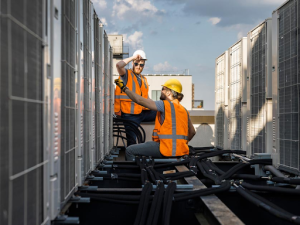
Common Types of Commercial HVAC Systems
In commercial buildings, a reliable heating, ventilation, and air conditioning (HVAC) system is essential for maintaining a comfortable, healthy environment for occupants. Choosing the right system in Cocoa, FL requires considering factors such as building size, design, and local climate. This guide explores the most common types of commercial HVAC systems, their advantages, and typical applications to help building owners and managers make informed decisions.
Packaged Units
Packaged HVAC units combine all necessary components, including the compressor, evaporator, and condenser, into a single unit, usually installed on the roof. This compact design is ideal for smaller commercial spaces, minimizing the system’s footprint and simplifying installation and maintenance. In Cocoa, FL, where space can be limited, packaged units provide an efficient way to manage indoor climate without sacrificing valuable real estate.
Split Systems
Split HVAC systems consist of separate indoor and outdoor units connected by refrigerant piping. These systems offer flexibility to meet specific zoning requirements, making them ideal for buildings with multiple rooms or areas requiring independent temperature control. Split systems operate quietly and efficiently, making them a popular choice for small offices, multi-tenant buildings, and other commercial properties in Cocoa, FL.
Variable Refrigerant Flow (VRF) Systems
VRF systems represent advanced commercial HVAC technology, providing precise control and high energy efficiency. They can cool and heat different zones simultaneously by adjusting refrigerant flow to each space. VRF systems are well-suited to high-end offices, hotels, and hospitals in Cocoa, FL. Their sophisticated design also supports sustainable building practices, making them an excellent choice for energy-conscious businesses.
Ductless Mini-Split Systems
Ductless mini-split systems include an outdoor compressor connected to one or more indoor air-handling units. These systems are perfect for offices, small commercial spaces, or sections of larger buildings that require individual climate control. Without the need for ductwork, mini-splits are ideal for retrofitting older buildings in Cocoa, FL where installing ducts may be impractical or expensive. They provide flexible, efficient, and targeted comfort.
Chiller Systems
Chiller systems cool buildings by circulating chilled liquid produced through a vapor-compression or absorption refrigeration cycle. This liquid removes heat from indoor spaces, providing consistent cooling. Chillers are highly efficient and capable of handling large cooling loads, making them suitable for offices, malls, hospitals, and other high-density commercial spaces in Cocoa, FL. They are particularly valuable in Florida’s hot climate, where robust cooling is essential.
Conclusion
Selecting the right commercial HVAC system is critical for occupant comfort, indoor air quality, and energy efficiency. From compact packaged units to advanced VRF systems, each type offers unique benefits. Understanding these common systems helps ensure you choose the solution that best meets your building’s specific requirements.
Reach Out to Dittmer Air Conditioning & Heating
If you’re considering a new HVAC system or an upgrade for your commercial building in Cocoa, FL, Dittmer Air Conditioning & Heating is here to help. Our experienced team provides expert guidance to select and install the right system for your space. Contact us today by calling (321) 637-0170 or filling out our online form for a consultation. Your comfort and satisfaction are our top priorities.